
Comprehensive Education Key to Well Rounded Individuals
My View: Don’t narrow the focus of our schools
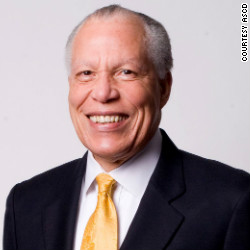
By Gene Carter, Special to CNN
Licensed through the Creative Commons Attribution 4.0
Editor’s note: Gene Carter is CEO and executive director of ASCD, an international education leadership association with 150,000 members—superintendents, principals, teachers, professors, and advocates — in more than 145 countries. A veteran educator with experience as a teacher, administrator, superintendent and university professor, Carter took over the helm of ASCD (formerly the Association for Supervision and Curriculum Development) in 1992.
Every parent knows how important it is for a child to experience classes beyond math and reading. Many parents I talk to tell me that their child’s favorite subject is art, history or physical education.
One parent recently described to me how her daughter’s physical education teacher was able to tie science and physics to each lesson. Another parent praised the school gardening program and how much her son was learning about health and math by plotting out garden planters that grew many varieties of vegetables.
Now, I fully understand the importance of the language arts and math education and the tremendous focus placed on these subjects in schools. However, we also know that different students learn in different ways. Some children, for example, have more success improving their language arts skills in a history class because of their interest in the subject, and some understand the laws of physics better from activities in a physical education class than in a math class.
This differentiated learning is why it is so important to keep what those of us in education call a “comprehensive education” in our schools.
ASCD, the organization I lead, is heading a new coalition comprising more than two dozen national education organizations to promote school programs beyond reading, math and science. We believe a comprehensive education in all core academic subjects, including physical education and health education, is necessary to prepare graduates for college and careers.
The problem we’re facing is that the politicians in Washington don’t necessarily see things our way.
The federal budget is reducing or eliminating funding for individual art, civics, economics, foreign languages, geography and history programs and wants to consolidate the funding that is left into one pool of money. With only one, smaller source of funds available to these equally important programs, each of them must compete against one another for money, forcing us to ask questions such as, “What is more important for students: civics or art?”
This isn’t a fair question, especially if you talk to the parents of the girl who loves art and whose brother excels at speaking Spanish. Each of these core subjects needs support, because each of these programs is essential to providing a comprehensive education that prepares our children for the real world.
How often do you, at your job, just read? Or just do math? How often do you use skills you learned in art class to put together an aesthetically pleasing, effective PowerPoint presentation? Do you ever need to translate that presentation into a foreign language for global clients?
Outside of work, think about your hobbies. I have a passion for travel that was born from my grade-school geography lessons. School is where children’s love of learning is nurtured through exposure to the essential subjects of all varieties. We can’t narrow the focus of our schools into just math and reading and still expect to graduate students who are ready for college, a career and citizenship. A comprehensive education provides students the opportunity to discover what they excel at and inspires a boost in overall student performance and confidence across all subjects.
We must ensure that policymakers at the local, state and federal levels include all elements of a comprehensive education in any definition of college, career and citizenship readiness and that they maintain funding for each discipline, with each receiving a minimum level of resources. We also need to ensure that any competition for funds is conducted within each discipline; it is one thing to have different foreign language programs competing for funding based on which approach is more effective, but let’s not create situations where art programs compete against language programs.
We must also urge policymakers to ensure that these well-rounded programs are effective – that is, that they improve student learning and that they are constantly evolving. Finally, let’s begin reporting on the student achievement results of these programs at the school, district and state levels.
In a United States that provides a comprehensive education to all students, I envision creative, well-rounded people who are ready for the constantly evolving challenges of our world.
I imagine dance students who are thriving readers, great painters who understand photosynthesis and exemplary history students who are equally comfortable with advanced calculus. Well-rounded students become higher achievers who promote responsibility, a sense of community and a respect for the rights and freedoms that our country cherishes. We must continue to fight for each child, in each classroom to have access to many disciplines. It will make our children, and our society, better.
To learn more about the College, Career,and Citizenship Readiness Coalition and to view the entire list of members, visit the ASCD College, Career and Citizenship Education site.
The opinions expressed in this commentary are solely those of Gene Carter.






Leave a Reply
Want to join the discussion?Feel free to contribute!